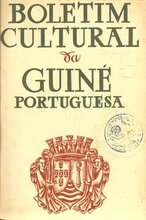
Description
Portuguese Guinea was the last portuguese colony in Africa to receive the National Press, in 1880. This happened at the same time that the administration of that territory ceased to depend on Cape Verde. Thus began the publication of the Boletim Oficial da Guiné, which was the only information medium in Guinea throughout the Monarchy. The main objetive of this newsletter was to grant a public voice to the colonial government. Unlike the other African colonies, the press in Guinea emerged only during the Republic (1910), with the advent of several newspapers and magazines, such as Ecos da Guiné, Quinzenário Independente Defensor dos Interesses da Província; A Voz da Guiné, Quinzenário Republicano Independente, Pró-Guiné, Órgão do Partido Republicano Democrático. However, most of this periodicals had an ephemeral life, which indicates the lack of a consolidated press in Guinea.
There are several reasons for this, such as the structural weakness of the public institutions in this territory, due to the political and economic weakness of the Portuguese presence in Guinea, which was compensated by a strong military presence, which was not prone to leisure and reading as the colonial elites of other places.
Besides, during the dictatorship of the Estado Novo, the colonial government did not need censorship since there were no journalistic activities that questioned or opposed authoritarian policies.